
BigClash Licence, Trust and Australian Regulatory Context
 Available in AU
BigClash trust and regulation in Australia
No Australian local licence was verified for BigClash. ACMA states that online casino services are prohibited interactive gambling services when providers offer them to people in Australia, and the Interactive Gambling Act 2001 is the core Commonwealth law for this area. That does not justify a blanket claim about every action by an individual player, and this page does not make one. Instead, it separates three questions: whether BigClash has an Australian licence, what Australian provider-side rules say about online casinos, and what trust evidence can be checked independently.
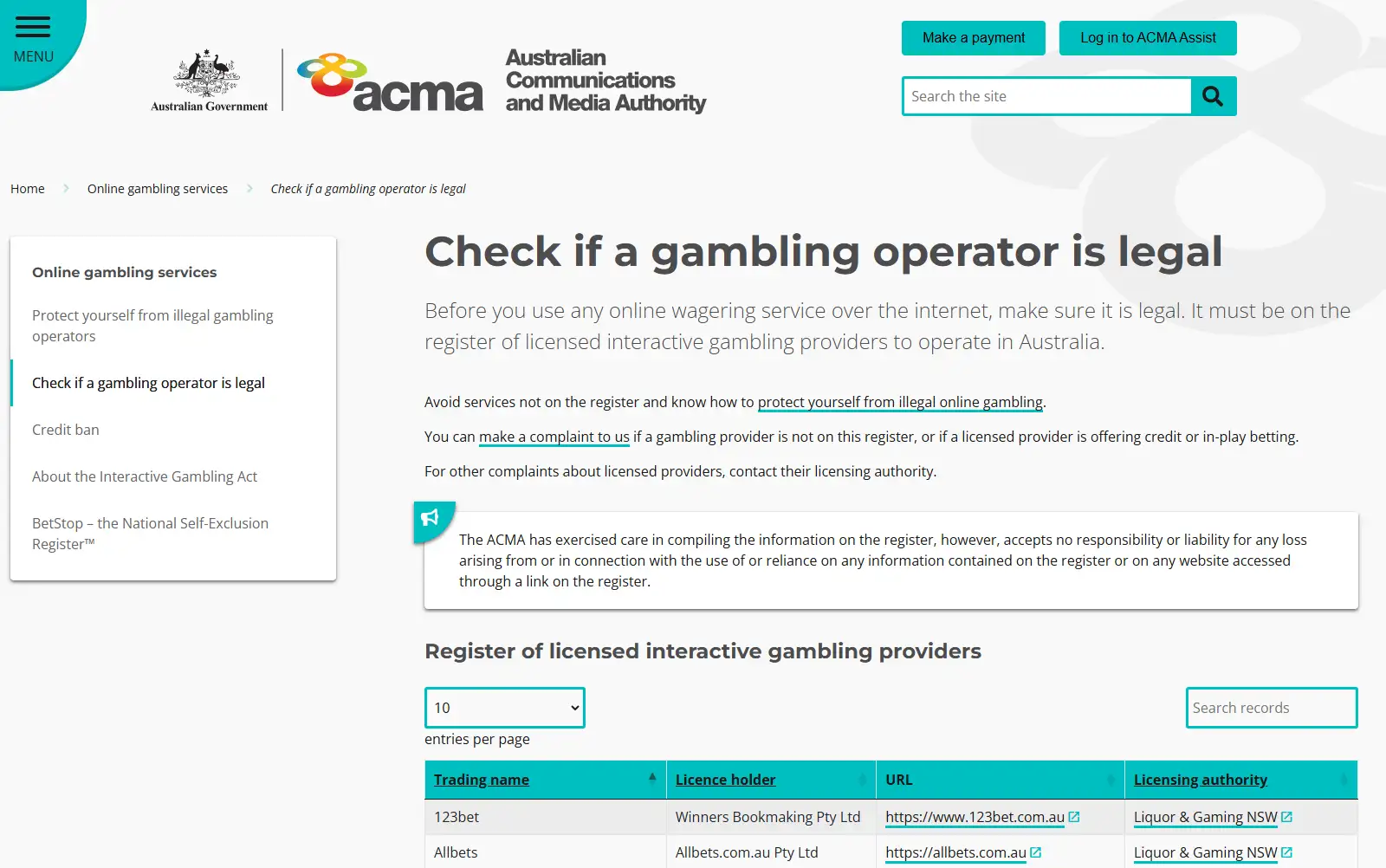
Table of Contents
- The Australian regulatory starting point
- Localisation is not the same as an Australian licence
- What ACMA says about online casinos
- What the licensed-provider register can and cannot tell you
- Why offshore regulation deserves a separate check
- Trust signals beyond licensing
- BetStop and why coverage should not be assumed
- Consumer protection is partly about the route available when something goes wrong
- The 2026 reform package and what changes next
- Practical risk checks for an Australian reader
- What Australian regulation changes about evaluating BigClash
The Australian regulatory starting point
Australia regulates interactive gambling through the Interactive Gambling Act 2001 at Commonwealth level, with the Australian Communications and Media Authority, or ACMA, administering and enforcing key federal rules. ACMA states that online casino services are prohibited interactive gambling services when offered to people in Australia. It also says banned services must not be advertised in Australia. These are provider-facing regulatory rules and should not be simplified into a blanket statement about every possible action by an individual player.
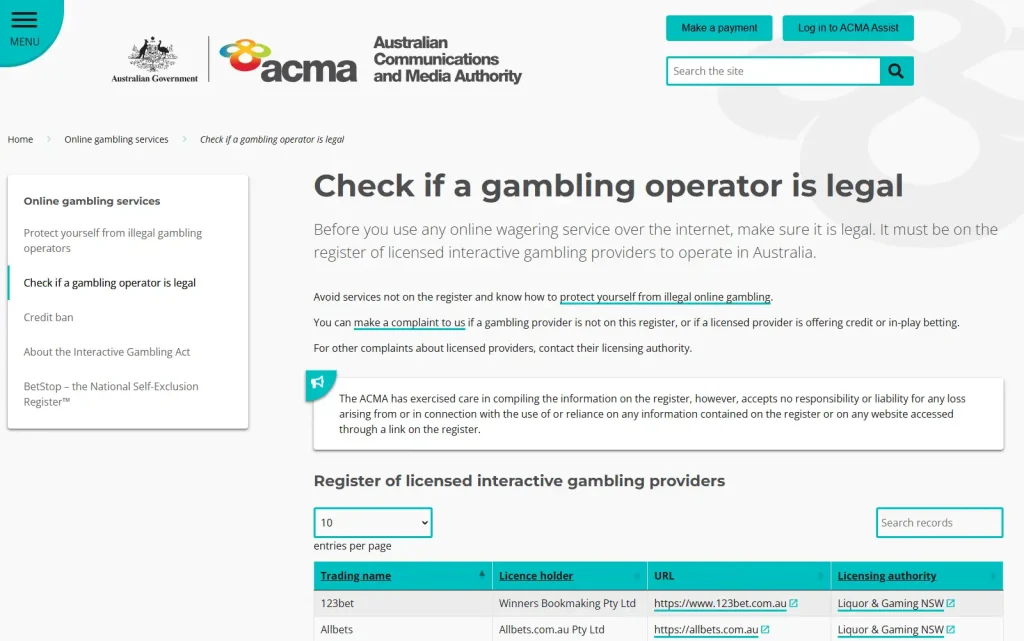
ACMA also maintains a register of licensed interactive gambling providers for services that are permitted to operate under Australian licensing arrangements, such as licensed wagering services. BigClash should not be treated as Australian-licensed unless the current ACMA register lists the relevant provider. That local register check does not by itself prove or disprove every other claim that might circulate online about the operator.
For readers assessing BigClash, the regulatory question therefore has two layers: what Australian law allows providers to offer, and what licence or supervision actually applies to BigClash. Keeping those layers separate is more useful than reducing the answer to a single “legal” or “illegal” label.
Localisation is not the same as an Australian licence
BigClash can present Australian-facing features without being an Australian-licensed online casino. English language support, Australian currency references, localised pages or marketing aimed at Australians are product and localisation signals. They do not create an Australian gambling licence.
This distinction is easy to miss because localisation feels official. A site may recognise AUD, use Australian terminology such as “pokies”, or publish pages aimed at Australian readers. None of those features substitute for a regulator entry. For licensing questions, the meaningful evidence is the relevant regulator or licensing authority, not the appearance of the website.
| Signal | What it can show | What it does not prove |
|---|---|---|
| English interface | The service is usable in English | An Australian licence |
| AUD references | Australian-dollar handling or localisation may be supported in some contexts | Local regulatory approval |
| Australian landing pages | The brand targets or addresses Australian readers | Inclusion on the ACMA licensed-provider register |
| Use of “pokies” | Australian-facing terminology | Any licence status |
| Regulator register entry | Evidence of a licence within that regulator’s scope | Broader protections outside the listed scope |
What ACMA says about online casinos
ACMA’s current guidance says the Interactive Gambling Act 2001 makes it illegal for gambling providers to offer certain online services to people in Australia, and it lists online casinos among the banned services. ACMA can investigate prohibited services, issue enforcement action and use website blocking as one disruption measure. The regulator’s public material is the strongest source for the Australian provider-side position, so this guide follows that wording rather than inferring a broader conclusion.
The enforcement context is active rather than theoretical. ACMA continues to publish investigations and website-blocking actions involving prohibited interactive gambling services. That matters for practical evaluation because access to an offshore casino can be disrupted even if the website is reachable at the time you check it. Availability today is not the same thing as regulatory acceptance or guaranteed future access.
ACMA also warns consumers that services outside the Australian legal framework may not provide the same customer protections as licensed Australian wagering services. That is relevant when considering dispute pathways, complaint handling and the ability of an Australian regulator to intervene.
What the licensed-provider register can and cannot tell you
ACMA tells consumers to check its register when evaluating an online wagering service that claims to be legal to operate in Australia. The register lists trading names, licence holders, URLs and licensing authorities for licensed interactive gambling providers. BigClash should not be treated as an Australian-licensed provider unless the current ACMA register lists the relevant provider.
Absence from that register should be interpreted carefully. It supports the statement that no Australian local licence was verified for BigClash. It does not automatically authenticate or disprove every offshore regulatory claim. Offshore licences must be checked with the relevant offshore authority, and a specific licence number should not be treated as officially verified unless the official register confirms it.
A specific Anjouan licence number should not be published as official unless the relevant register confirms it. Accordingly, this page does not present an unconfirmed number as an official fact. If a third-party review displays one, treat it as a lead to verify against the issuing authority rather than as proof by repetition.
Why offshore regulation deserves a separate check
An offshore licence, where valid, can tell you that an operator falls under another jurisdiction’s licensing framework. It does not turn that operator into an Australian licensee and it does not replace Australian rules about which services may be offered to people in Australia. The two systems answer different questions.
For a reader, the practical checks are straightforward: identify the named legal operator, identify the claimed licensing authority, open the authority’s own register, and match the operator, domain and licence status. If any of those elements cannot be matched, avoid upgrading the claim from “stated” or “reported” to “verified”. This page therefore does not invent a licence number to fill that gap.
Trust signals beyond licensing
Licensing is important, but a trust assessment also includes operational evidence. Clear terms, consistent withdrawal rules, accessible KYC requirements, payment ownership checks and transparent complaint procedures can all help a user understand what will happen if something goes wrong. Conversely, vague terms, unexplained account restrictions or inconsistent payment information are reasons to slow down and gather more evidence.
BigClash’s current terms describe identity and source-of-funds checks and set out conditions around account verification. Those terms are useful because they establish what the operator says it may require. They are not a substitute for an Australian licence, and they do not prove that every dispute will be resolved in a particular way.
User reviews can add another perspective, but they need careful handling. Individual complaints may be genuine, incomplete, resolved later or impossible to verify. This guide therefore separates regulator facts from review-site or user-report signals. The dedicated complaints page is the better place to examine complaint patterns without turning anecdotes into regulatory findings.
BetStop and why coverage should not be assumed
BetStop is Australia’s National Self-Exclusion Register for Australian licensed online and phone wagering providers. That scope is specific. This page does not claim that BigClash is covered by BetStop, because an Australian local licence was not verified for BigClash.
This is an important consumer-protection distinction. A reader who has used BetStop should not assume that every offshore gambling website will be technically covered just because it is accessible from Australia. The separate responsible gambling guide explains the difference between Australian national protections and site-level tools without overstating BigClash’s status.
Consumer protection is partly about the route available when something goes wrong
One reason local licensing matters is that it can define who receives a complaint, what standards apply and which regulator has jurisdiction over the provider. For an Australian licensed wagering service, the licensing authority listed in the ACMA register is part of that route. BigClash was not verified on that Australian register, so readers should not assume the same Australian complaint pathway applies to this casino service.
That does not mean every dispute has no possible route. It means the route must be identified from the operator’s actual terms and any genuinely verified offshore regulatory framework rather than borrowed from Australian licensed providers. Save copies of relevant terms, transaction references and account messages if a dispute develops. Clear records can help establish what was displayed and what action was requested, even where regulatory options are more limited.
Reviews and complaint forums can still be useful as leads. Repeated reports about the same operational issue may justify closer scrutiny, but they remain different from regulator findings. A trust assessment should label each kind of evidence for what it is: official regulator information, operator terms, independent reporting or individual user testimony.
The 2026 reform package and what changes next
Australia passed the Interactive Gambling Amendment (Gambling Reform) Act 2026 in August 2026, with most measures scheduled to commence on 1 January 2027. Because this page is dated September 2026, readers should distinguish rules already in force from measures that have passed but are not yet generally commenced.
The existing core point for online casinos remains clear in ACMA guidance: providers must not offer prohibited online casino services to people in Australia, and prohibited services must not be advertised in Australia. Future reform can change enforcement tools or obligations, but it does not make it sensible to treat an offshore casino’s current availability as evidence of Australian approval.
Practical risk checks for an Australian reader
Before using any gambling service, separate marketing claims from verifiable evidence. Check the regulator position, identify who operates the site, read the withdrawal and verification terms, and understand the complaint route. If an operator claims an Australian licence, verify it directly in the ACMA register. If it claims an offshore licence, verify it with that authority rather than relying only on a badge in the footer.
Also think about what happens if access changes. ACMA uses website blocking against services it finds in breach of the Interactive Gambling Act, so a site that loads today may not remain equally reachable. Keep account records, transaction references and copies of relevant terms where appropriate. Those steps do not remove regulatory or financial risk, but they improve your ability to document a problem.
The BigClash Australia review brings these points together with games, payments and account usability. Readers interested in sports wagering should use the separate sportsbook guide, because Australian rules distinguish regulated wagering services from prohibited online casino services.
What Australian regulation changes about evaluating BigClash
For Australians, BigClash should be evaluated as an offshore service without a verified Australian local licence, against a regulatory backdrop in which ACMA classifies online casino services as prohibited interactive gambling services for providers offering them to people in Australia. That makes regulator evidence more important than localisation, branding or third-party licence badges. It also means consumer-protection expectations should not be borrowed automatically from Australian licensed wagering services. The most useful approach is to verify each regulatory claim at its source, keep provider-side Australian rules separate from individual-player questions, and avoid treating current website access as proof of local approval.