
BigClash KYC Australia: Documents, Checks and Verification Time
 Available in AU

BigClash KYC for Australia
BigClash can request identity, residence, payment-method ownership and source-of-funds evidence, and its terms allow KYC checks before or after deposits and around withdrawals. The current Terms v1.12 say requested information must be supplied within 30 days and that documents are usually verified within 10 days after the request is answered in full, although more time or additional checks may be needed in complex cases. Those timings are current terms statements, not guaranteed completion times. The exact documents depend on the request, so examples in the terms should not be turned into a universal checklist.

Table of Contents
- What BigClash can ask for during KYC
- The 30-day response window and stated verification time
- How document examples differ from a mandatory checklist
- Why KYC often becomes visible at withdrawal time
- Payment-method ownership can become part of the evidence request
- Australian context: KYC does not establish Australian licensing
- How to respond to a verification request efficiently
- How BigClash verification can affect an Australian withdrawal
What BigClash can ask for during KYC
BigClash’s current terms give the platform broad scope to verify identity, age, residence and the source of funds deposited to an account. The examples in the terms include properly certified identification, proof of residence, proof of ownership of payment methods and transaction histories such as bank or card statements. These are examples of evidence the platform may request, not a universal checklist that every user must upload in every case.
The same terms allow KYC procedures before or after deposits and in connection with a withdrawal. BigClash can also use additional security checks, including phone calls, face verification or other verification methods where required. For an Australian user, the safest expectation is therefore that verification can happen at more than one point in the account lifecycle and can expand if the initial documents do not resolve the checks.
| Verification area | Examples in BigClash terms | How to interpret it |
|---|---|---|
| Identity | Certified ID; refund section also names passport, driving licence and identity card | Examples, not proof that all three are always required |
| Residence | Proof of residence; examples elsewhere include utility bill, bank statement or rental agreement | Document must support the address being checked |
| Payment ownership | Proof of ownership and transaction histories for payment methods used | Account and funding ownership should be consistent |
| Source of funds | Information can be requested about the source of deposited funds | May require financial evidence depending on the case |
| Additional checks | Phone, face verification or other security procedures | Can supplement document review |
The 30-day response window and stated verification time
Terms v1.12 say requested documents and information must be provided within 30 days after the request is made. The same section says BigClash will usually verify documents and information within 10 days after the request has been answered in full, while noting that additional time or checks may be required depending on the circumstances and complexity of the case. These are current statements in the terms, not a guarantee that every verification closes in exactly 10 days.
The phrase “answered in full” matters. The stated verification period starts from the point at which the request has been fully answered, not necessarily from the moment the first file is uploaded. If one document is unreadable, expired, inconsistent or does not cover what was requested, the practical timeline can be longer because the request may not yet be complete.
The terms also reserve the right to withhold payment or suspend the account until the requested information is supplied. Failure to provide requested information within the 30-day window can lead to account closure under the terms. That makes it important to read the actual request carefully rather than sending a generic collection of documents and assuming the case is complete.
How document examples differ from a mandatory checklist
Casino KYC pages often become misleading when they turn examples into a fixed list. BigClash’s terms do not say that every account must always submit the same set of files. Instead, they say the platform may request information needed to manage the account and verify identity or source of funds, then give examples. The right interpretation is conditional: the exact request depends on what the platform is checking.
A proof-of-identity request may be satisfied by the type of government-issued document accepted in the specific case. A residence check may call for a document that links the user’s name to the address on the account. A payment-ownership check can require evidence that the card, bank account or other method used actually belongs to the account holder. A source-of-funds review can go further and ask for evidence about where deposited money came from.
This distinction is useful because uploading unnecessary sensitive documents is not automatically better. The goal is to respond to the actual KYC request completely and accurately. If the request is unclear, obtaining clarification through the platform’s support channel is preferable to guessing what evidence is required.
Why KYC often becomes visible at withdrawal time
BigClash can perform checks before or after deposits, so KYC is not technically limited to withdrawals. In practice, however, a withdrawal is a point where unresolved verification becomes particularly visible because the terms expressly allow payment to be delayed while identity, account balance, source of funds and compliance checks are completed. The platform also reserves the right to postpone payments until verification procedures are successfully completed.
This is why the account setup and withdrawal pages should be read together. Accurate registration data, payment ownership and consistent account information reduce the chance that a later check is complicated by avoidable mismatches. The account setup guide covers those upstream controls, while the withdrawals guide covers payout-specific limits and processing conditions.
A verification delay should not be confused with the published processing time for a withdrawal request. The terms make the processing timetable conditional on checks being completed. KYC can therefore sit in front of, or interrupt, ordinary payment processing depending on the case.
Payment-method ownership can become part of the evidence request
BigClash’s terms require the payment method used to fund the account to belong to the user and allow the platform to request proof of ownership and transaction histories. This is an important KYC point because identity verification is not only about a passport or driving licence. It can extend to the financial route used on the account.
For card or bank evidence, users should be cautious about exposing more information than is necessary for the verification purpose. The exact redaction rules should come from BigClash’s live request or secure upload instructions rather than from a generic review page. A public guide should not invent document-handling rules that are not stated in the terms.
Source-of-funds checks are also distinct from simple payment ownership. Owning a bank account proves who controls the payment method; it does not necessarily answer where the deposited funds originated. BigClash reserves the ability to request evidence relevant to both questions.
Australian context: KYC does not establish Australian licensing
KYC is an operator control, not a licence check. BigClash can require identity and source-of-funds verification while still being assessed separately under Australian gambling law. ACMA states that online casino services are prohibited interactive gambling services for providers to offer to people in Australia, and consumers are directed to its licensed-provider register when checking legal online wagering operators.
That distinction matters because a successful identity check does not mean the platform has Australian regulatory approval. It only means the operator has completed whatever verification process it applied to the account. For regulatory context, use the separate BigClash trust and regulation guide rather than treating KYC approval as evidence about licensing.
How to respond to a verification request efficiently
Start by reading exactly what BigClash has requested and matching each requested item with current, legible evidence. Check that the name and address on the documents are consistent with the account data and that any payment-ownership evidence relates to the payment method actually used. If the request mentions source of funds, treat that as a separate requirement rather than assuming a photo ID alone resolves it.
Respond through the channel specified by the platform and keep a record of what you submitted and when. Because the terms refer to a 30-day response period and a usual verification period after the request is answered in full, knowing the submission date and whether the platform asked for additional material can help you understand where the case stands. Do not create a second account to avoid a verification problem; BigClash’s terms prohibit duplicate accounts.
If gambling is becoming difficult to control while a verification or withdrawal is pending, do not treat the pending payment as a reason to continue gambling. BigClash lists support for self-exclusion, and the broader responsible gambling guide explains account-control options.
For the broader context, see the BigClash Australia review.
How BigClash verification can affect an Australian withdrawal
BigClash can delay a withdrawal while identity, account, source-of-funds or compliance checks are completed, so verification can directly affect when a payout moves forward. Its current terms give users 30 days to provide requested material and say documents are usually reviewed within 10 days after a request has been answered in full, with extra time possible for more complex cases. The practical priority is consistency: accurate account data, payment methods in your own name and a complete response to the specific KYC request. For an Australian reader, keep this operational question separate from legal status – passing KYC does not establish that an online casino is licensed to operate in Australia.
Recommend
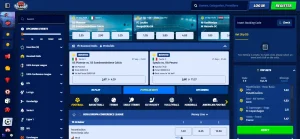
BigClash Sportsbook Australia: What the Site Offers and What Local Rules Mean
Sports betting features and Australian rules BigClash presents sports betting alongside its casino products on...

BigClash Games and Pokies for Australian Players
BigClash games and pokies BigClash displayed more than 13,000 games when checked in September 2026,...
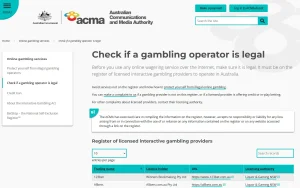
BigClash Licence, Trust and Australian Regulatory Context
BigClash trust and regulation in Australia No Australian local licence was verified for BigClash. ACMA...
BigClash Payments in Australia: AUD, Deposits and Cashier Options
BigClash payments for Australia BigClash supports AUD within its published withdrawal framework and published BigClash...